Three kinds of things, three simple rules.
Necessities, luxuries, capital goods. Sort everything a society makes into those three buckets, give each one rule, and the economy quietly reorganizes itself — no central plan required.
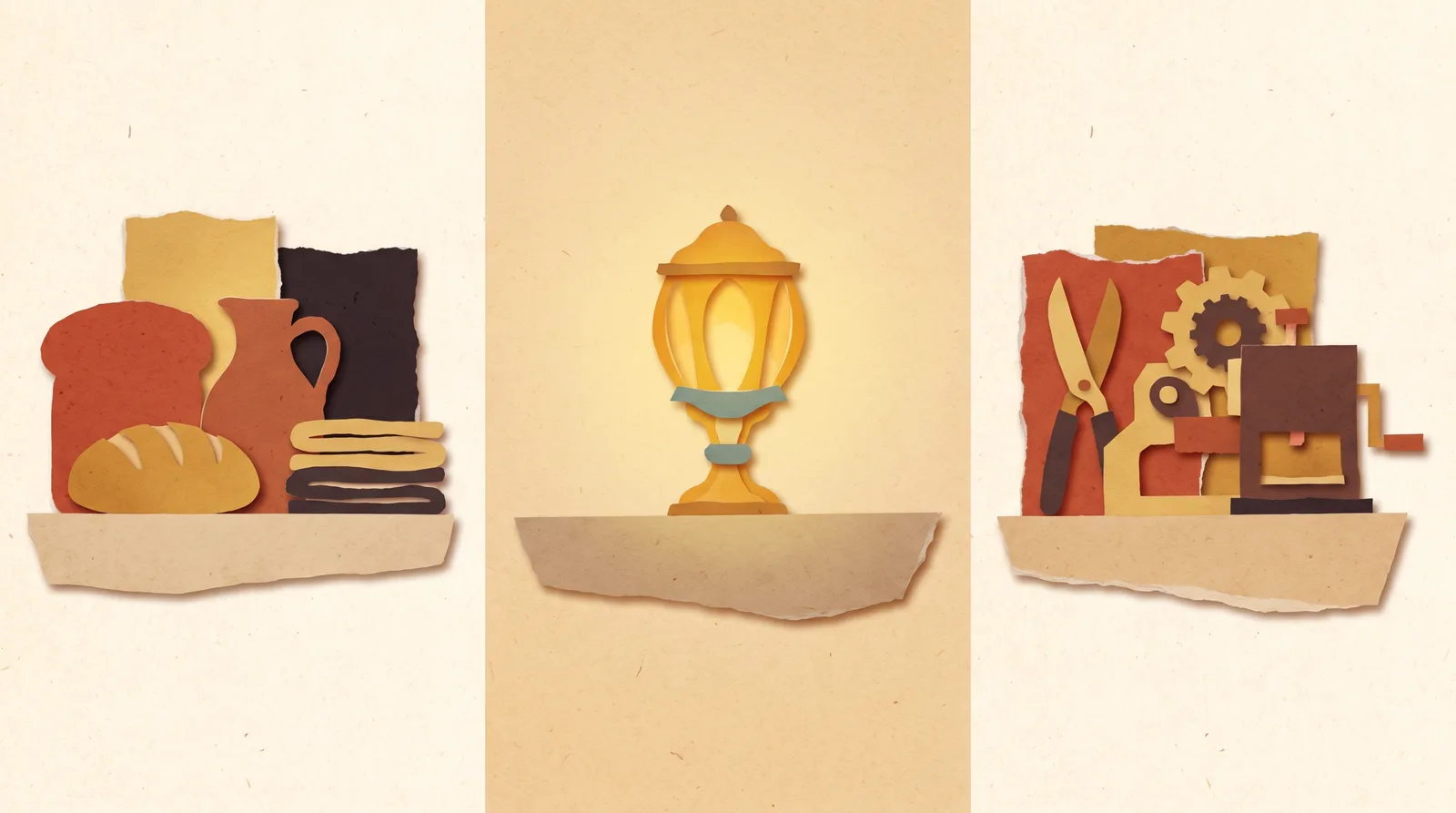
Most of Copiosis's strangeness melts away once you see this one distinction. Everything made falls into one of three buckets, and each bucket carries a single rule. That's nearly the whole economic engine.
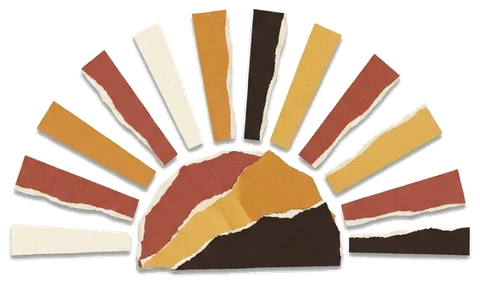 The three buckets
Three kinds of things, three rules
Always free
Food, shelter, clothing, healthcare, education — and the water, power, and transport that make them usable.
Rule: free to everyone Why: so no one is ever coerced by need. The providers are still rewarded — for the benefit their work creates.Yours with NBR
Everything beyond the baseline — the finer meal, the nicer instrument, the trip, the standout version of anything.
Rule: unlocked with NBR Why: this is where ambition and delight live, and where NBR finally gets spent — without gatekeeping survival.Free to creators
The land, tools, machines, materials, and workspace people need to make things.
Rule: free to would-be producers Why: so the barrier to creating drops to near zero — no fortune, no loan, no landlord required to begin. The twist
The maker decides which bucket
Here's the move that makes it work: the person who makes something chooses which bucket it goes in. Bake bread and offer it as a necessity, and it's free to all — your reward comes from the good it does. Bake an elaborate wedding cake and offer it as a luxury, and people unlock it with NBR. Either way you're rewarded for the benefit you create; the choice only shapes how people receive it, never whether you're recognized.
Nobody is assigned a category from above, and nobody is forced to give their finest work away. The system trusts makers to place their own output — and rewards the benefit whichever bucket they pick.
 Same loaf, two ways
How the bucket changes the experience
Take one baker's bread and follow it down each path. The maker is rewarded in both — only the recipient's experience differs.
The rippleHow three rules reorganize an economy
Change what things cost and why, and behaviors we treat as laws of nature simply stop making sense:
- Artificial scarcity disappears. No one profits by withholding supply to prop up a price — so there's no reason to.
- Planned obsolescence loses its point. Nothing gains when things break; a product that lasts creates more benefit, so durability is rewarded, not punished.
- The capital barrier collapses. Because the tools of creation are free, a good idea no longer waits on money to be tried.
- Whole bureaucracies vanish. Free necessities need no billing, collections, eligibility checks, or means-testing.
- Competition stops being ruinous. A second good bakery still competes with the first for the loaves people choose — but it can't bankrupt it. There's no rent to miss, no debt to default on, and no payroll to make.
- Manufactured need loses its grip. Advertising built to make you feel you lack a necessity has nothing to sell against — the necessity is already free.
 The honest edges
What about the genuinely scarce?
Three buckets handle the vast majority of what an economy makes, because most things can be produced in abundance. But some things are stubbornly finite — an original painting, a plot of land with a rare view, a seat at a one-night performance. There's only so much to go around, and no rule makes more.
How it's meant to work
Finite things are placed by their maker, like everything else — usually as luxuries unlocked with NBR. A maker can set that NBR level as high as they like, even out of almost everyone's reach, or choose not to offer the item at all. Rationing by reward covers a lot, and survival is never on the line.
What's still open
A currently open question is who gets something when more people want it than there is to go around — a genuinely scarce luxury, or a necessity briefly in short supply. Deciding a fair way to allocate in that case — a lottery is the simplest and least gameable — is unsettled, and communities would work it out themselves. It applies to necessities as much as luxuries.
Keep exploringRelated deep dives
NBR, in Depth
The reward that unlocks luxuries — created from nothing, non-transferable, gone when spent.
Read this →Who Actually Runs It
The citizen-jury process behind the hard fairness calls — order without a ruler.
Read this →A Day in Copiosis
See free necessities and free capital goods in a lived day — the bakery that opened without a loan.
Read this →Who keeps all this fair?
Free necessities and citizen-drawn lines only work if someone tends them — without becoming a ruler. Here's how.
Who actually runs itBack to Deep Dive